Sydney has a strong network of qualified relationship counsellors working across the CBD, inner suburbs, and outer metro areas, with many also offering telehealth sessions. Services cover couples counselling, marriage therapy, separation support, pre-marital counselling, and family mediation. Most practitioners hold registration with the Australian Association of Relationship Counsellors (AARC) or are registered psychologists with the Psychology Board of Australia.
What to Expect From a Relationship Counsellor in Sydney
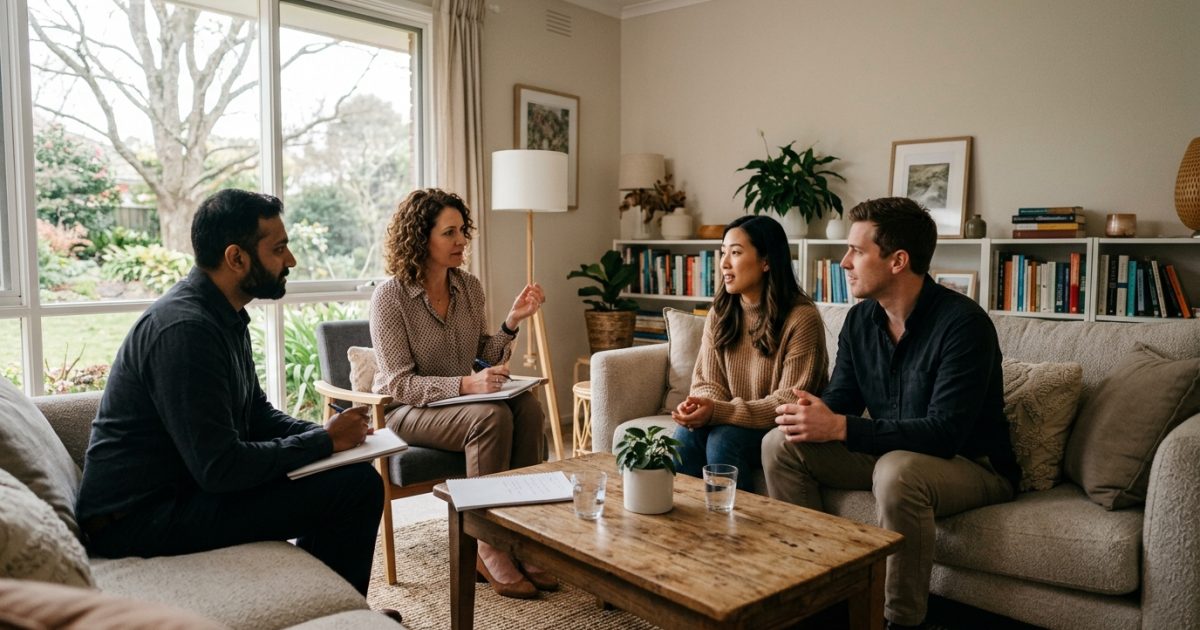
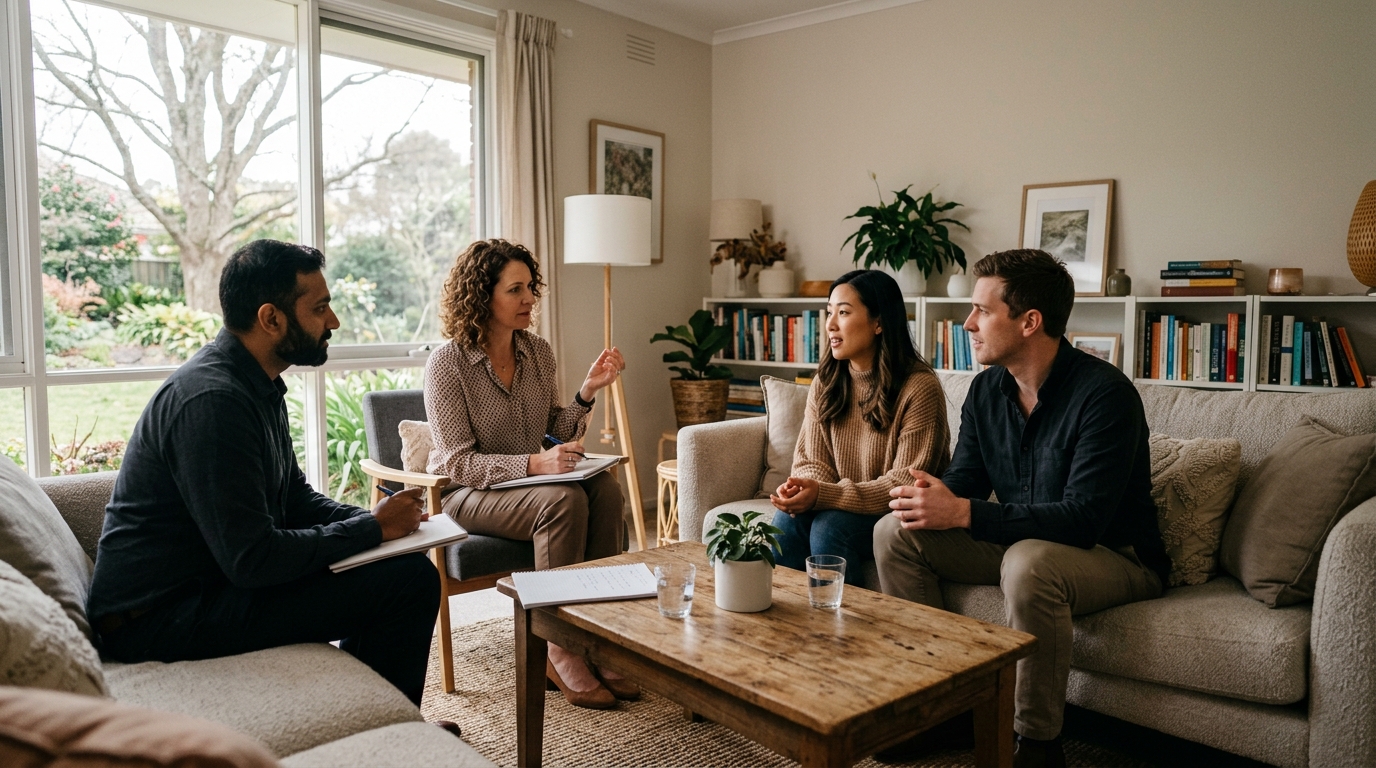
A first session typically runs 50 to 60 minutes and focuses on understanding the presenting issues, relationship history, and goals for therapy. Counsellors draw on a range of evidence-based approaches including the Gottman Method, Emotionally Focused Therapy (EFT), and Cognitive Behavioural Therapy (CBT). Sessions can involve both partners together, or individual appointments alongside couples work, depending on what the therapist and clients agree suits the situation.
Session costs in Sydney generally sit between $150 and $280 per hour for private practitioners. Psychologists who bulk bill or offer Medicare rebates under a Mental Health Care Plan can reduce out-of-pocket costs to around $90 to $130, though these plans cover individual mental health treatment rather than couples counselling directly. Some community-based services, including Relationships Australia NSW (reachable on 1300 364 277), offer sliding-scale fees based on income.
Finding a Registered Counsellor in Sydney
The AARC and the Australian Counselling Association (ACA) both maintain searchable online directories where you can filter by location, specialty, and gender of the practitioner. Relationships Australia NSW operates multiple Sydney offices including in Ashfield, Fairfield, and the CBD. The Sydney Couples Centre and similar specialist practices are located in areas like Surry Hills, North Sydney, and Bondi Junction, giving reasonable geographic spread for in-person appointments.
When assessing a counsellor, check for formal qualifications (a minimum of a Graduate Diploma in Counselling or equivalent), professional association membership, and experience specifically with couples or relationship work. Many Sydney counsellors list their training models and specialisations on their practice profiles, which makes it straightforward to find someone whose approach matches your situation.
Telehealth Relationship Counselling
Since 2020, telehealth has become a mainstream option rather than a fallback. Most Sydney-based relationship counsellors now offer video sessions via Zoom or a similar platform, which is particularly useful for couples with conflicting work schedules, those in outer suburbs like Penrith or Cronulla, or situations where one partner travels frequently. Fees for telehealth sessions are generally the same as in-person rates.

Frequently Asked Questions
How many sessions will we need?
There is no fixed number, but most couples see meaningful progress within six to twelve sessions. Shorter-term work of four to six sessions can address specific communication issues, while deeper relationship repair or separation counselling often takes longer. Your counsellor should give you a general estimate after the first or second appointment.
Does Medicare cover couples counselling in Sydney?
Medicare does not directly subsidise couples counselling. A Mental Health Care Plan provides rebates for individual psychological treatment only. Some private health insurance policies include a counselling benefit, so it is worth checking your extras cover with your insurer before booking.
What is the difference between a counsellor and a psychologist for relationship work?
Psychologists hold a university degree plus supervised postgraduate training and are registered with AHPRA. Counsellors may have diploma or degree-level qualifications and are registered through bodies like the ACA or AARC. Both can provide effective relationship counselling; the practical difference often comes down to Medicare eligibility, fee levels, and the practitioner’s specific training background.