Quick price summary: Orthodontists in Sydney (2026)
- Low end: $2,500 – $4,000
- Mid-range: $4,000 – $6,500
- High end / enterprise: $6,500 – $9,500+
Prices in AUD. Last updated 2026.
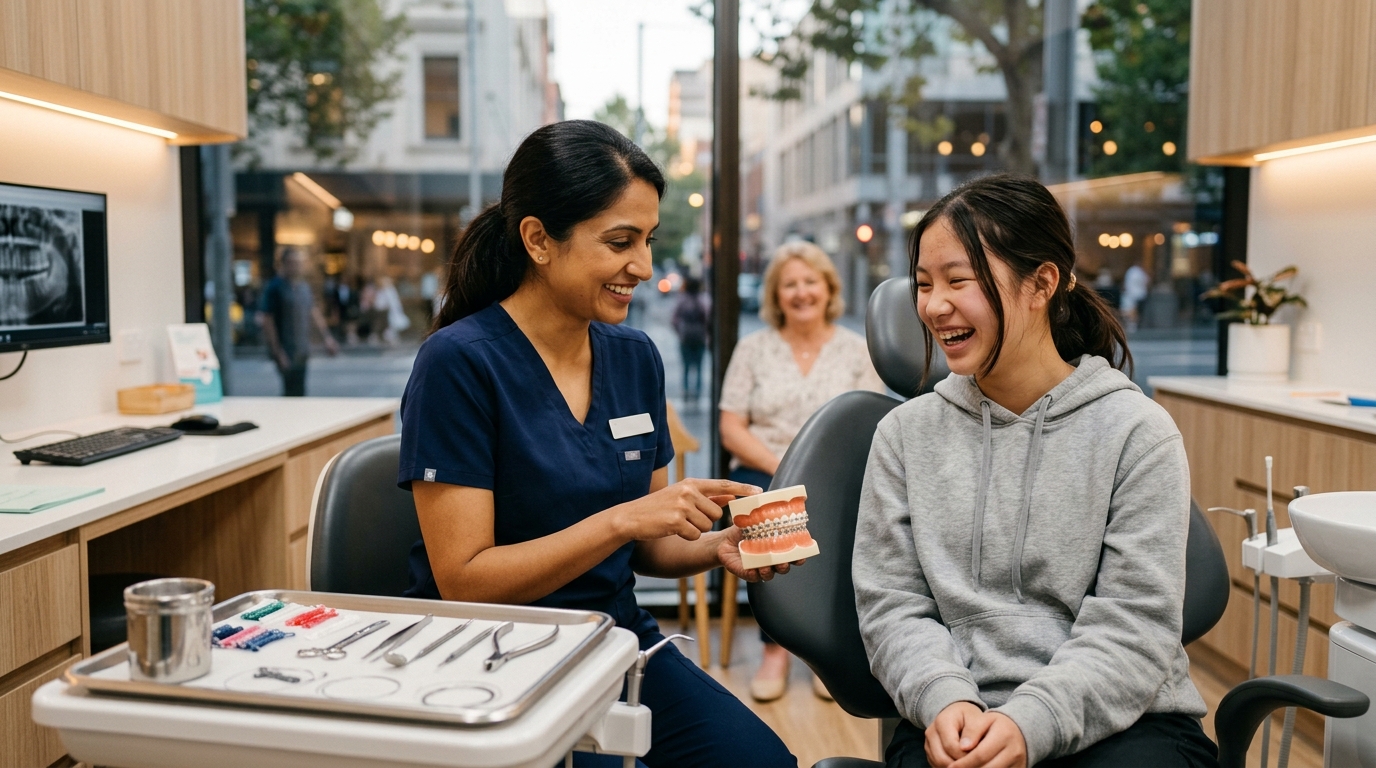
Orthodontic treatment in Sydney covers a wide range of procedures designed to straighten teeth, correct bites, and improve overall dental alignment. The most common options patients encounter are traditional metal braces, ceramic braces, lingual braces, and clear aligners such as Invisalign. Each approach differs in materials, visibility, treatment duration, and the level of clinical skill required to deliver a good result.
Costs vary significantly across Sydney because no two treatment plans are identical. The severity of misalignment, the type of appliance chosen, the experience of the orthodontist, and the location of the practice all push the final figure up or down. A patient with minor crowding needing clear aligners will pay far less than someone requiring full fixed lingual braces for a complex bite correction. Understanding the price landscape before you book a consultation means you can plan your budget and ask the right questions.
What Do Orthodontists Cost in Sydney?
In Sydney, orthodontic treatment broadly ranges from around $2,500 for a short-term clear aligner course at the entry level, through to $9,500 or more for full lingual braces on complex adult cases. The most commonly quoted range for a full course of treatment with traditional metal braces sits between $3,000 and $7,000, while Invisalign and other clear aligner systems typically fall between $4,000 and $8,500 depending on the number of aligners required. Ceramic braces, which blend more naturally with tooth colour, generally price between $4,500 and $8,000.
Adults often pay more than children or teenagers because adult bone is less malleable, treatment can take longer, and many adults opt for less visible appliances that carry a price premium. Most Sydney orthodontists include retainers and a set number of review appointments within their quoted fee, but it is worth confirming this in writing before you sign anything. Patients who need extractions or other preparatory dental work before braces are fitted will face additional costs outside the orthodontist’s own fees.
Price Breakdown by Service Level
| Service Level | What You Get | Typical Price Range (AUD) | Best For |
|---|---|---|---|
| Basic | Traditional metal braces for straightforward cases, standard review schedule, basic retainer included | $2,500 – $4,000 | Children and teenagers with mild to moderate crowding or spacing |
| Standard | Full metal or ceramic braces for moderate cases, or a standard Invisalign course (up to 26 aligners), retainer included | $4,000 – $6,500 | Teenagers and adults with moderate alignment or bite issues |
| Premium | Invisalign Comprehensive, ceramic braces on upper and lower arches, or self-ligating braces for complex cases, with extended review period | $6,500 – $8,500 | Adults wanting discreet treatment or patients with more complex orthodontic needs |
| Enterprise / Custom | Full lingual braces (placed behind the teeth), combination appliance therapy, surgical orthodontic cases, or elite Invisalign with 3D scanning and digital treatment planning | $8,500 – $9,500+ | Patients with severe malocclusion, adults who cannot accept visible appliances, or those requiring jaw surgery alongside orthodontic treatment |

What Affects the Cost of Orthodontists in Sydney?
Type of appliance
Metal braces remain the most affordable option for straightening teeth. Ceramic braces cost more because the brackets are manufactured from tooth-coloured or clear materials. Lingual braces are the most expensive fixed option because they are custom-fabricated and require specialised placement technique. Clear aligners like Invisalign sit in the mid-to-upper range, with cost linked to the total number of aligner stages needed to complete the treatment plan.
Complexity of the case
A patient with mild crowding on the upper arch alone will pay considerably less than someone who needs both arches treated, has a significant overbite or underbite, or requires bite correction alongside tooth straightening. Orthodontists assess complexity at the initial consultation using X-rays, photographs, and digital scans, and their quoted fee reflects the expected treatment duration and clinical effort involved.
Orthodontist’s experience and clinic location
Registered specialists who have completed additional postgraduate training in orthodontics typically charge more than general dentists offering orthodontic services. Clinics in the Sydney CBD, the North Shore, and the Eastern Suburbs tend to carry higher overheads, which are reflected in their fees. Practices in outer suburban areas such as Parramatta, Liverpool, or the Hills District often price their services lower for comparable treatment quality.
Inclusions in the quoted fee
Not all quoted prices cover the same scope. Some clinics include retainers, whitening after treatment, and unlimited review appointments as standard. Others charge separately for retainers (typically $300 – $600 per arch), replacement aligners, or additional appointments needed if treatment runs over schedule. Always confirm what is and is not included before accepting a quote.
Payment plans and financing
Many Sydney orthodontic practices offer in-house payment plans that spread the cost over the treatment period, often with no interest if paid within the treatment timeframe. Third-party finance options are also available through providers like Afterpay, Zip, or Humm. These plans make higher-cost treatments more accessible but can add to the total amount paid if interest applies. Private health insurance with extras cover can offset between $1,000 and $2,500 for eligible patients, depending on the fund and level of cover.
How to Get Accurate Quotes
- Book consultations with at least two or three registered specialist orthodontists in Sydney. Many offer free or low-cost initial appointments. Seeing a specialist rather than a general dentist for an orthodontic quote gives you a more clinically grounded assessment of what treatment you actually need.
- Ask for a written treatment plan and itemised fee breakdown at each consultation. Request clarity on what happens if treatment takes longer than planned and whether additional appointments attract extra charges.
- Check your private health insurance before attending. Contact your fund and ask for your annual orthodontic benefit and any waiting period that applies. Bring this information to the consultation so the practice can factor it into your out-of-pocket estimate.
- Ask specifically about payment plan options and whether interest applies. Compare the total cost of financing against paying upfront, and check whether early repayment is possible without penalty.
- Confirm the credentials of the treating clinician. Specialist orthodontists in Australia are registered with the Dental Board of Australia and hold a postgraduate qualification in orthodontics. You can verify registration through the Australian Health Practitioner Regulation Agency (AHPRA) website.
Red Flags to Watch Out For
- A quote significantly below $2,500 for a full course of treatment with no clear explanation. Orthodontic treatment requires multiple clinical appointments, laboratory costs for custom appliances or aligners, and ongoing monitoring. Prices that appear too low often mean shortcuts in the treatment process or hidden fees to come.
- No physical examination or imaging before a price is given. Any accurate orthodontic quote requires X-rays and a clinical assessment. A practice that quotes a fixed price over the phone or online without examining your teeth first cannot be giving you a reliable figure.
- Pressure to sign a financial agreement at the first consultation. Reputable orthodontists give patients time to consider their options and compare quotes before committing to a treatment plan.
- Unclear or verbal-only explanations of what is included in the fee. Always request written documentation of the treatment plan, fee schedule, and payment terms before starting treatment.
- A general dentist offering orthodontic treatment at the same price as a specialist, without disclosing that they are not a registered orthodontic specialist. While general dentists can legally provide orthodontic services, treatment of complex cases requires specialist training.
- No clear process for handling problems mid-treatment. Ask what happens if an aligner breaks, a bracket falls off, or your teeth are not tracking as planned. A practice with no clear answer to these questions may leave you out of pocket for remediation work.

Frequently Asked Questions
How much do orthodontists cost in Sydney on average?
For a full course of orthodontic treatment in Sydney, most patients pay between $4,000 and $7,000. Simple cases using metal braces can come in under $4,000, while complex cases or less visible options such as Invisalign Comprehensive or lingual braces can reach $8,500 to $9,500 or more. The exact figure depends on the type of appliance, the complexity of the case, and the specific clinic you choose.
Why are some orthodontists prices so much cheaper?
Lower prices sometimes reflect shorter or simpler treatment scope, such as treating one arch only or using a basic aligner package rather than a full comprehensive course. Some general dental practices offering orthodontic services price below the specialist market to attract new patients. Overseas-trained clinicians operating in lower-overhead suburban locations may also price competitively. The concern with unusually low pricing is that it can indicate a limited treatment plan that may not fully address your needs, or a practice that adds costs progressively once treatment is underway.
Is it worth paying more for orthodontists in Sydney?
For moderate to complex cases, yes. A registered specialist orthodontist with postgraduate training is better equipped to manage cases involving bite correction, significant crowding, or jaw discrepancies. The difference in outcome quality between a well-managed comprehensive treatment and a basic plan that straightens the front teeth without addressing the bite can be significant in the long run. For minor cosmetic alignment, a well-reviewed general dentist offering clear aligner treatment may deliver a good result at a lower cost, provided the clinical assessment is thorough and the treatment plan is appropriate.
Getting your teeth straightened is a meaningful investment and the outcome will be visible every day for years. Comparing at least two or three quotes from registered specialists, confirming what is included in the fee, and checking your private health insurance entitlements before committing will put you in a strong position to choose a provider and a treatment plan that suits both your clinical needs and your budget.
For a curated list of top-rated providers, see our guide: Best Orthodontists in Sydney (2026).