Quick price summary: Music Schools in Sydney (2026)
- Low end: $25 – $45 per lesson (group classes, community music programmes)
- Mid-range: $50 – $85 per lesson (private tuition at an established school)
- High end / enterprise: $90 – $150+ per lesson (specialist conservatorium-affiliated teachers, elite exam preparation)
Prices in AUD. Last updated 2026.
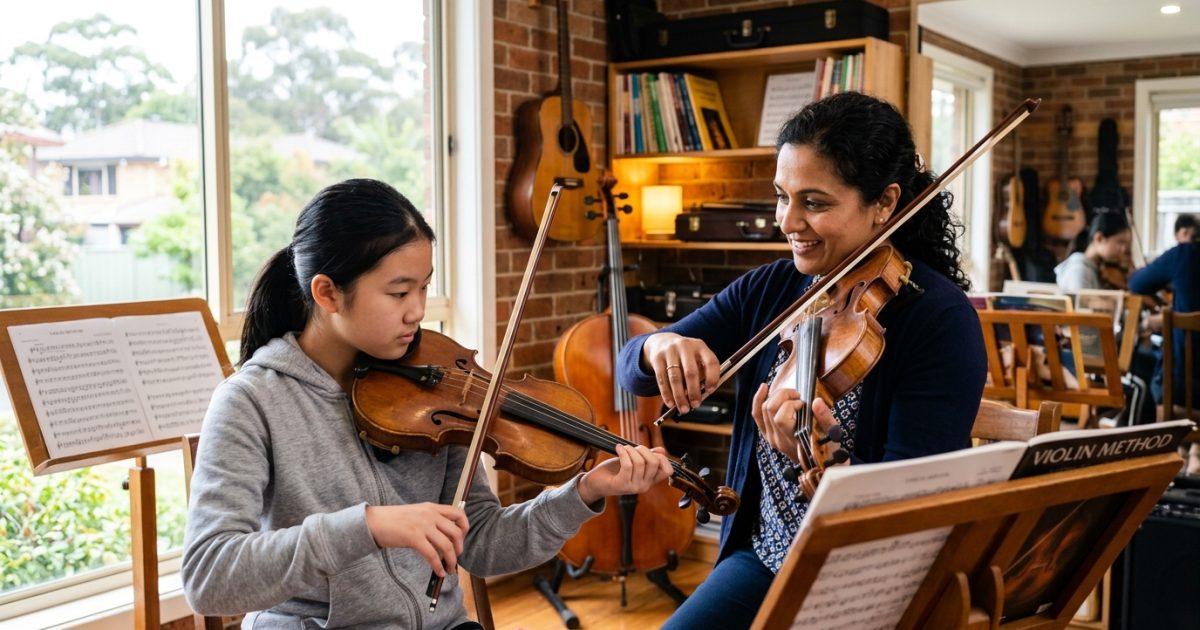
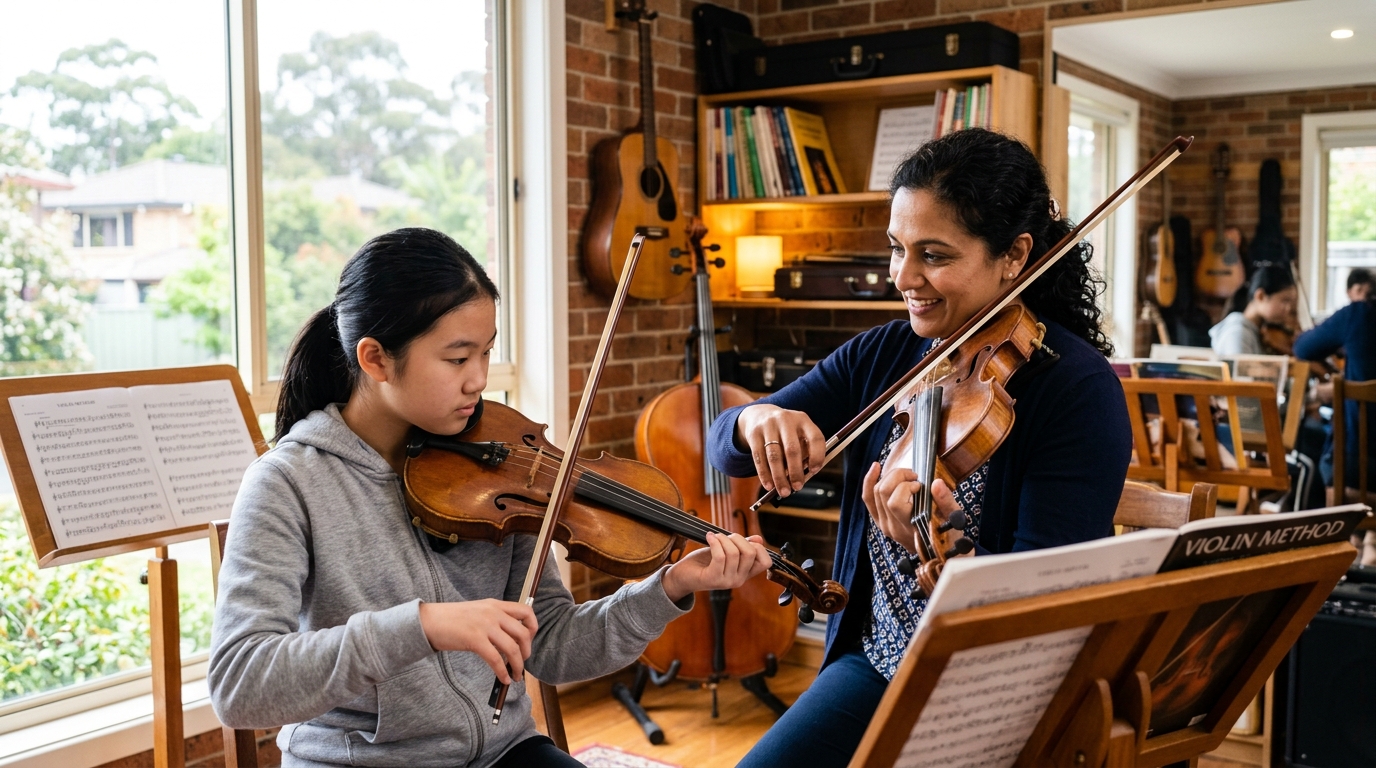
Music tuition in Sydney covers a wide spectrum of instruments, age groups, and learning formats. A family enrolling a child in beginner piano lessons at a suburban school will pay a very different rate compared with an adult pursuing advanced violin technique with a conservatorium-trained teacher. Schools typically charge per lesson, per term, or via a monthly direct-debit arrangement, and the instrument, teacher qualification, lesson duration, and location all feed into the final figure families see on an invoice.
Costs vary as much as the programmes on offer. A school in the Inner West running group ukulele sessions for young children charges far less per student than a specialist school offering one-on-one saxophone or cello tuition with an AMEB examiner-qualified teacher. Online music lessons have added another pricing tier, often sitting below in-person rates for the same teacher. Understanding what drives those differences helps families make a sound decision before signing up or paying a term fee upfront.

What Do Music Schools Cost in Sydney?
Across Sydney, the typical private one-on-one lesson runs between $50 and $85 per 30-minute session at an established music school. Lessons of 45 minutes generally cost $70 to $110, and 60-minute lessons sit between $90 and $150 depending on the teacher’s experience and the school’s location. Group lessons, which are common for early childhood programmes (such as Kinder Beat-style classes for under-fives), drop significantly to $15 to $35 per session. Term enrolments, usually spanning 10 weeks, mean families are committing $500 to $850 per term for regular private tuition at a mid-range school.
Schools in the CBD, the North Shore, and the Eastern Suburbs tend to sit at the higher end of those ranges, reflecting commercial rent pressures and the concentration of experienced teachers in those areas. Schools in Western Sydney and outer suburban areas frequently offer the same instruments, including piano, guitar, drums, violin, singing, bass, viola, clarinet, recorder, flute, trumpet, and music theory, at rates $10 to $20 per lesson below the city average. Online lessons, offered by most schools since 2020, typically come in $5 to $15 cheaper per session than the equivalent in-person rate.
Price Breakdown by Service Level
| Service Level | What You Get | Typical Price Range | Best For |
|---|---|---|---|
| Basic / Group | Group lessons (3 to 8 students), shared teacher time, foundational technique, instruments such as ukulele, recorder, or early childhood music programmes | $15 – $45 per session | Young children starting out, families on a tight budget, trial enrolments |
| Standard / Private | One-on-one lessons, 30-minute sessions, qualified teacher, covers piano, guitar, drums, singing, violin, flute, saxophone, and other popular instruments | $50 – $75 per lesson | School-age students progressing through grades, hobbyist adults |
| Premium / Extended | 45 to 60-minute private lessons, experienced or specialist teacher, AMEB or ABRSM exam preparation, instruments including cello, viola, trumpet, clarinet, mandolin, bass, and music composition | $80 – $120 per lesson | Students sitting formal examinations, intermediate-to-advanced learners |
| Elite / Conservatorium-Affiliated | 60-minute sessions with conservatorium-trained or performing professionals, advanced technique, composition, music theory at diploma level, full exam coaching, some schools include encore keys or double bass | $125 – $150+ per lesson | Serious students preparing for HSC music, tertiary auditions, or performance careers |
What Affects the Cost of Music Schools in Sydney?
Teacher qualifications and experience
A teacher with a Bachelor of Music or higher from a conservatorium, years of professional performance experience, or AMEB examiner status commands a significantly higher hourly rate than a recent graduate or casual teacher. Schools staffed predominantly by working musicians or university lecturers pass those costs on through lesson fees. For families whose child is aiming at formal examinations or selective school music programmes, that premium is generally worth paying.
Instrument type
Guitar and piano teachers are relatively plentiful in Sydney, which keeps rates competitive. Specialists in instruments such as cello, double bass, oboe, harp, trumpet, or mandolin are fewer, and their scarcity pushes fees higher. Drum lessons often require a school with a dedicated acoustic drum room, adding overhead that group facilities do not carry for instruments like ukulele or recorder.
Lesson duration and format
Most schools offer 30, 45, or 60-minute lessons. The per-minute rate tends to drop slightly as duration increases, but total cost goes up. Group lessons drop the per-student cost substantially, though each student receives less individual attention during the session. Online lessons sit below the in-person rate at most Sydney schools, making them a practical option for students with long commutes or tight schedules.
School location and overheads
A music school operating from a purpose-built studio in Chatswood or Newtown pays higher commercial rent than one running from a church hall in Penrith or a teacher’s registered home studio. Those overhead costs flow directly into the lesson fee. In-home tuition, where the teacher travels to the student, can add a travel surcharge of $10 to $25 per session on top of the standard lesson rate.
Enrolment fees, term policies, and late cancellation charges
Many schools charge an annual registration fee of $50 to $120 per student, which is separate from tuition. Some require full-term payment upfront with no refund for missed lessons, while others allow make-up lessons within the same term. Late cancellation fees (usually equivalent to the full lesson cost if notice is given under 24 hours) can add up unexpectedly across a year. Families should factor these into the total annual cost before comparing schools on lesson price alone.
How to Get Accurate Quotes
- Contact at least three schools in your area and ask specifically for a written fee schedule covering lesson duration, term length, registration fees, and cancellation policy. Verbal quotes are often incomplete.
- Ask whether the quoted price includes GST. Most music schools are GST-registered and are required to include it, but some smaller sole-trader teachers may not be, which affects comparison.
- Request a trial lesson before committing to a full term. Most reputable schools offer a paid or discounted first lesson so the student can assess the teacher’s style and the school’s facilities without paying a full term upfront.
- Confirm which teacher will actually deliver the lessons. Some schools quote based on their most affordable teacher, then assign a more experienced (and more expensive) teacher once enrolment is confirmed.
- Ask about sibling discounts, early payment discounts, and whether online lessons are available at a different rate. Many schools offer 5 to 10 per cent off for families enrolling more than one child, which can make a meaningful difference over a full year.
Red Flags to Watch Out For
- No written fee schedule provided before enrolment. Schools unwilling to put their pricing in writing often have unclear or inconsistent billing practices.
- Full term fees paid upfront with no make-up lesson policy. If a teacher cancels or the school cannot provide a replacement, families have little recourse to recover unused lesson costs.
- Unlisted teacher qualifications. Reputable schools are transparent about their teachers’ backgrounds. Avoid schools that cannot confirm whether their teachers hold formal qualifications or have experience teaching the relevant age group.
- No trial lesson option. A school that insists on full term payment before the student meets their teacher is a meaningful risk, particularly for young children who may not settle with a given teacher’s style.
- Vague cancellation and notice period terms. Schools with ambiguous late cancellation policies often apply fees inconsistently. Ask for the policy in writing before signing any enrolment form.
- Unusually low rates with no explanation. A school advertising private piano or guitar lessons at $25 to $30 per session in 2026 Sydney is likely employing unlicensed or very inexperienced teachers, using extremely short lesson windows (under 25 minutes), or is otherwise cutting corners that will affect tuition quality.

Frequently Asked Questions
How much do music schools cost in Sydney on average?
The average cost for a private 30-minute lesson at a Sydney music school in 2026 sits between $55 and $75. Full-term enrolment (typically 10 weeks) for one student taking weekly private lessons generally costs $550 to $750 per term, excluding any registration fee. Group lessons for younger children start from around $15 to $35 per session, making them the most affordable entry point for families with children aged three to seven.
Why are some music schools prices so much cheaper?
Lower prices typically reflect one or more of the following: the school employs less experienced or unqualified teachers, lessons are shorter than advertised, the school operates from a low-cost or subsidised venue such as a community hall, or group classes are being quoted against private lesson rates. Online-only schools also carry lower overheads and frequently pass some of that saving on to students. Cheaper does not always mean inferior, but it does warrant closer scrutiny of what the fee actually includes.
Is it worth paying more for music schools in Sydney?
For students pursuing formal examinations (AMEB, ABRSM), the HSC, or tertiary music auditions, paying for a qualified specialist teacher is generally worth the higher cost. For children in the early stages of learning an instrument, a well-structured programme at a mid-range school often delivers comparable results to a premium school. The quality of the individual teacher matters more than the school’s branding or fee level, so a trial lesson with the actual assigned teacher is the most reliable way to assess value before committing to a term.
Sydney families have access to a broad range of music schools, from community group programmes at $15 per session through to specialist conservatorium-affiliated tuition at $150 per hour. The most useful approach is to define what the student actually needs (instrument, age, goals, preferred format), gather written quotes from several schools, attend a trial lesson, and review the full fee structure including registration costs and cancellation terms before making a commitment. Lesson price is one input into that decision, but teacher quality, programme structure, and the school’s flexibility will shape whether a child or adult student stays engaged and progresses over time.