

Quick price summary: Croissant in Sydney (2026)
- Low end: $4.00 – $5.50
- Mid-range: $6.00 – $9.00
- High end / enterprise: $9.50 – $14.00+
Prices in AUD. Last updated 2026.
Sydney’s croissant scene spans everything from pre-baked supermarket staples to hand-laminated pastries made with imported French butter and 72-hour fermentation schedules. The category includes plain butter croissants, traditional chocolate croissants (pain au chocolat), almond croissants filled with frangipane, and more elaborate seasonal creations such as banoffee mousseline or mocha praline variations. Each style carries a different production cost, which feeds directly into the retail price you pay at the counter.
Prices vary across Sydney for several reasons: ingredient sourcing, lamination technique, premises location, and whether the bakery produces croissants in-house or takes delivery of par-baked product. A specialty patisserie in Surry Hills or Paddington with a trained pastry chef laminating dough on-site will price very differently from a chain café in a shopping centre. Understanding those differences helps you decide what you are actually paying for.
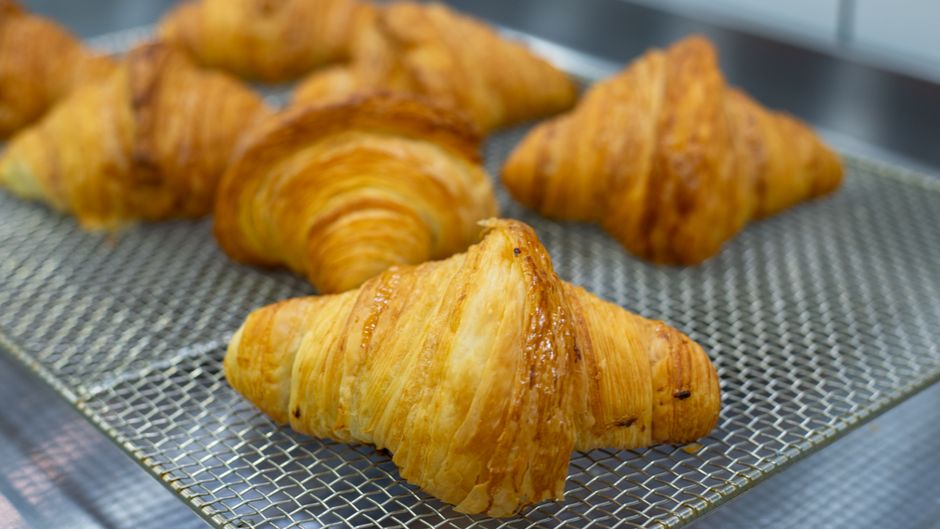
What Do Croissant Cost in Sydney?
A plain butter croissant at a standard Sydney café or bakery generally sits between $5.50 and $7.50 in 2026. Traditional chocolate croissants (pain au chocolat) typically run $6.00 to $8.50. Almond croissants filled with frangipane are priced higher, usually $7.00 to $10.00, reflecting the additional labour and ingredients involved. Specialty croissants featuring fillings such as banoffee mousseline, pistachio cream, or seasonal fruit compotes can reach $12.00 to $14.00 at destination bakeries.
At the budget end, supermarkets and service-station cafés sell croissants from $2.50 to $4.50, though these are almost always produced from frozen par-baked dough rather than fresh laminated pastry. Wholesale or catering orders of 12 or more croissants from a specialty bakery often attract a per-unit price of $5.50 to $7.00 depending on style and volume, which is worth exploring for events or office catering.
Price Breakdown by Service Level
| Service Level | What You Get | Typical Price Range (AUD) | Best For |
|---|---|---|---|
| Budget | Par-baked or frozen-thaw croissant, basic butter flavour, supermarket or chain café | $2.50 – $5.00 | Everyday grab-and-go, price-sensitive buyers |
| Standard | Fresh-baked in-house or from a local supplier, plain or chocolate, reasonable lamination quality | $5.50 – $7.50 | Daily café visits, reliable quality without premium pricing |
| Premium | House-laminated with cultured or imported butter, frangipane almond, traditional chocolate croissant, or seasonal flavours such as banoffee mousseline | $7.50 – $10.50 | Weekend treats, gifting, patisserie-level quality |
| Specialty / Custom | Signature creations using intentionally curated ingredient combinations, complex layered fillings, limited-run flavours, or catering boxes assembled to order | $10.50 – $14.00+ | Special occasions, food enthusiasts, corporate gifting, events |
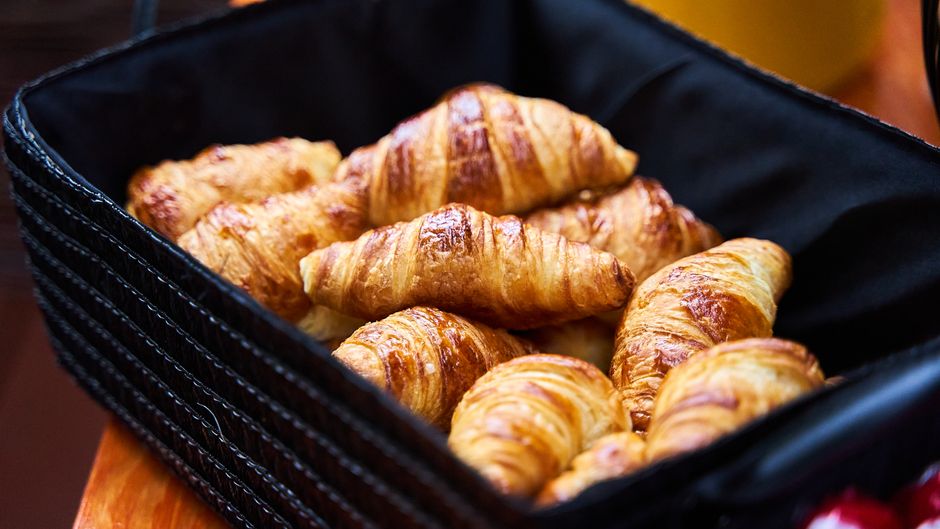
What Affects the Cost of Croissant in Sydney?
Butter quality and sourcing
Butter is the defining ingredient in a laminated croissant. Bakeries using high-fat cultured butters from France or top-tier Australian producers pay significantly more per kilogram than those using standard commercial butter. That cost flows through to the retail price. A croissant made with Beurre de Charentes AOP will cost more than one made with a generic bulk butter, and the difference in flavour and texture is usually noticeable.
In-house lamination versus par-baked supply
Laminating croissant dough properly requires skilled labour, temperature-controlled equipment, and multiple resting periods over 24 to 72 hours. Bakeries that do this entirely in-house carry higher production costs than those receiving par-baked croissants from a central supplier or frozen dough manufacturer. In-house lamination is almost always reflected in a higher retail price, and generally in a better product.
Filling complexity
A plain butter croissant involves far less labour than one filled with frangipane, mousseline cream, or a layered banoffee filling. Each additional preparation step adds time and ingredients. Traditional almond croissants, for instance, require making and piping frangipane, topping with flaked almonds, and a secondary bake. Specialty fillings such as pistachio cream or chocolate mousseline add further cost.
Location and rent
A patisserie in the Eastern Suburbs or the CBD carries substantially higher occupancy costs than one in an outer western suburb or an industrial estate operating primarily through pre-orders. Those overheads are reflected in menu pricing. Destination bakeries in high-foot-traffic areas also invest more in presentation and fit-out, which contributes to the overall price point.
Volume and purchase format
Buying a single croissant at the counter is the most expensive way to purchase per unit. Many Sydney bakeries offer box deals (typically 6 or 12 croissants) at a reduced per-unit rate. Catering orders placed in advance attract further discounts. If you are buying for a group, contacting the bakery directly for a bulk price is worth doing before assuming the single-unit price applies.
How to Get Accurate Quotes
- Identify whether you want a single purchase or a bulk/catering order, as pricing structures differ significantly between the two.
- Contact bakeries directly for catering enquiries rather than relying on displayed menu prices, which typically apply to counter sales only.
- Specify the croissant type (plain butter, almond frangipane, traditional chocolate croissant, or a specialty filled variety) since each is priced separately.
- Ask whether the croissants are baked in-house or supplied par-baked, particularly if quality is a priority for an event or client-facing occasion.
- Confirm lead times for specialty or custom orders. Bakeries producing complex laminated croissants with seasonal fillings often require 24 to 72 hours notice and may have minimum order quantities.
Red Flags to Watch Out For
- No visible dough preparation or lamination equipment on site, combined with a claim of “freshly baked from scratch” croissants.
- Croissants priced below $3.50 at a café claiming to bake in-house. At current ingredient and labour costs in Sydney, this margin is not sustainable without using par-baked or frozen product.
- A uniform, perfectly symmetrical shape with a pale, soft crust. Properly laminated croissants have irregular layering and a deep golden colour from caramelised butter.
- No indication of butter type or provenance on the menu or when asked. Bakeries proud of their product can usually tell you exactly what butter they use.
- Specialty flavour names (such as “frangipane” or “mousseline”) applied to what is clearly a basic filled pastry with no visible lamination or quality interior structure.
- Catering quotes that seem very low per unit without any explanation of the product source or preparation method.

Frequently Asked Questions
How much do croissant cost in Sydney on average?
The average price for a croissant at a Sydney café or bakery in 2026 sits around $6.50 to $7.50 for a plain butter or traditional chocolate croissant. Almond and specialty filled croissants average $8.00 to $11.00. Budget options from supermarkets or chain outlets are available from $2.50 to $4.50 but use a different production method.
Why are some croissant prices so much cheaper?
Lower-priced croissants are almost always made from par-baked frozen dough, which requires no in-house lamination skill or equipment. The finished product is thawed and oven-finished, which takes minutes rather than the 24 to 72 hours required for a traditionally prepared croissant. The ingredient cost is also lower, as frozen dough suppliers use standard commercial butter rather than high-fat cultured varieties.
Is it worth paying more for croissant in Sydney?
If you are comparing a $4.00 supermarket croissant to an $8.50 in-house laminated version from a specialty bakery, the quality difference is substantial. The layers are more defined, the butter flavour is more pronounced, and the texture is crispier at the exterior with a soft, airy interior. For a daily commute purchase, the cheaper option is serviceable. For a weekend breakfast, a gift, or a catered event where presentation matters, the premium product is worth the price difference.
Sydney’s croissant market in 2026 gives buyers a genuine range of options, from reliable everyday pastries at accessible prices through to meticulously crafted specialty pieces using intentionally curated ingredients. Knowing what drives pricing means you can match your purchase to what you actually need, whether that is a quick breakfast or a box of almond and frangipane croissants for a client morning tea. The price gap between budget and premium is real, but so is the quality gap.
For a curated list of top-rated providers, see our guide: Best Croissant in Sydney (2026).